WHO IS READING THIS BLOG JESUS BLESS YOU

La situation difficile de Sri Lankais ?

 * Je vient de Sri Lankais en France depuis 2005. Ma famille est chrétienne. Ma maison était grande. Cette maison était à côte du centre commercial. Deux frères ont disparu. J'étais architecte de plain dans un bureau. Toutes les maisons ont été contrôlées par l'armée. De 2007 à 2009 le gouvernement a donné l'autorisation à l'armée de chercher des gens. Sri Lanka beaucoup garçons sont morts. (Le couvre-feu la nuit 9 heures au 4 heur le matin)
* par exemple:
* Jésus christ est né à Bethléem. Une étroite est née dans le ciel. Pour venir voir l'enfant les rois mages suivent l'étoile. Ils disent « Nous venons adorer le Roi des Rois » Hérode pense « Le roi c'est moi cet enfant doit mourir » Il dit aux Rois mages « allez et revenez me dire où est né cet enfant pour que moi aussi je le visite » Les rois mages rêvent « ne retournez pas chez Hérode » Ils rentrent par un autre chemin. Alors Hérode dit « tuez tous les enfants jusqu'a 2 ans »
La famille dormait dans la maison. Les militaires sont venus à la maison à minuit et ont frappé à porte. Nous
avons ouverte la port. Les militaires ont appelé le prénom du garçon. Le garçon est venu. Le militaire tué dans sa tête. Il est mort dans le salon. Les militaires sont repartis.
Ils ont pris les habitants tamouls dans leur maisons. Il y a une maison au carrefour. Ils ont pris cette maison et sont restés là. Beaucoup de personnes vont dans la rue pour travailler, à l'école, au marché, à l'hôpital en voiture en vélo ou à pieds. Les militaires arrêtent et contrôlent leur d'indente et leur sac a main. Une personne est pari travailler. Les militaires l'ont tué/ Elle est morte dans la rue ainsi, beaucoup de gens sont morts dans la rue.
* Les gens travaillent dans les boulangerie les salon de coiffure les couture. Les militaires sont venus au salon de coiffeur a demandé aux militaires. " Qu est ce que je vous fait? La barbe ou les cheveux? Es militaire n'ont pas répondu. Le coiffeur peur après les militaires l'ont tué. Il est mort dans coiffeur. Les militaire pouvez-vous réparer le moteur. Le mécanicien a réparer le moteur. Il est mort dans le garagiste. Les militaires sont entrés dans la boulangerie. Y-a-t -il un restaurant dans cette rue? Pouvez-vous venir avec nous? Oui, il est parti avec les militaire. Il est mort. Au Sri Lanka est dur.
* La population tamoule est sous haute surveillance d'une armée omniprésente. C'est une dictature défendue par les règles de l'armée. Au fils des ans. Le président a installé sa famille à des postes clés de Gotaraya, son irascible frère Cadet en ministre de la défense, et son autre frère Basil, en passant par son fils na mal. Le Sri Lanka reste très dangereux, pour les journalise la peur est omniprésent et les gens s'autocensurent. Mais la présence militaire ne faiblit pas. Les 200,000 soldat ne sont pas démobilise, Ils surveillant. Il contrôlent la population tamoule.
Share:

amazing Birds


Share:

Screening of Channel 4's Sri Lanka's Killing Fields to Canadian MPs

Screening of Channel 4's Sri Lanka's Killing Fields to Canadian MPs

Share:

NORE DAME DE VELANKANI AU Sud de I'INDE


Il Ya 400 ans, à Tamoulnadou, Un grand arbre prés du lac, l'ONU Jeune Garçon venait Tous Les Jours vendre pot non Sous de lait à homme des Nations Unies. Un jour il s'endormit fatigué sous l'arbre. Une grande lumière l'éblouit, HNE juin jeune femme très belle Avec Un enfant Dans les bras Lui dit << pouvez-vous me Donner PEU non de lait versez mon enfant, s'il vous plait? >> Il Lui Donne le pot de lait, l'enfant boit, et Lui déchirent le pot en souriant, et lève sa petite principales Vers Lui. Alors le garçon va porter le pot à l'Homme qui Lui Demande << Pourquoi il ya Moins de lait Aujourd'hui? >> Le garçon raconte Ce qu'il Vient de vivre, MAIS l'homme ne le Croit Pas. ILS VONT sous l'arbre, le garçon pleure PARCE qu'il HNE Traité de menteur, il crie << maman Venez! Venez vite maman! Alors la lumière >> jaillit et apparait la jeune femme et l'enfant, qui-explique à l'homme << c'est moi Qui ai PEU non Demande de lait versez mon fils >> L'homme tombe à terre et se Prosterne <<pardon si je N'ai Pas cru, CET Endroit sérums Votre sanctuaire madame >>. 


Un Jour Un handicapé, paralysé des Jambes, s'endort sous l'arbre. Il Voit la Vierge Avec l'enfant, un fils réveil il marche. Alors Tous de Lui demandeuse << Qui un fait CELA pour toi? >> Il raconte, sur le Croit, L'Endroit DEVIENT sacré.
Share:

Get out in french


Share:

how international silence enabled Sri Lanka’s genocide

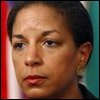
U.S. Ambassador to the U.N. Susan Rice
In March 2009 Sri Lanka had come to the attention of the UN’s Special Adviser for the Prevention of Genocide, Francis Deng, but despite his disquiet he did not take further steps as Sri Lanka had assured him the United States and India supported its military campaign, according to a leaked US cable. The account of the meeting on March 16, 2009 between Mr. Deng and the US Ambassador to the UN, Susan Rice, as well as other US cables, shows how international inaction and silence, rather than ignorance, made it possible for Sri Lanka to continue and escalate its mass killings of Tamil civilians.


U.S. Ambassador to the U.N. Susan Rice
Francis Deng, Special Adviser for the Prevention of Genocide
Robert O'Blake, Former Ambassador to Sri Lanka
The cable from the US mission to the UN in New York details the discussion between Mr. Deng and Ambassador Rice on genocide-related issues, including the cases of Sudan and Sri Lanka.


The discussion on Sri Lanka is summarised thus:


“Deng spoke of conversations that he had with that [Sri Lanka’s] permanent representative to the United Nations. The Sri Lankan perm rep told Deng that his country's actions in mounting an offensive against the Liberation Tigers of Tamil Elan (LTTE) in the north of Sri Lanka were known to its friends the United States and India.


“The Sri Lankan representative left the impression that his government's measures against the LTTE are supported by the US and India.


“A visit to Sri Lanka left Deng impressed with the great cleavages between the Sinhalese and Tamils that would not be solved by the government's victory on the battlefield.”


US knowledge and silence


There is no indication in the cable that Ambassador Rice had either contradicted Sri Lanka’s assertion, or raised the issue of mass casualties amongst civilians being inflicted by the ongoing attacks and humanitarian blockade by the Colombo government – though these were discussed in relation to Sudan.


This is despite, just two days before the Deng-Rice meeting, US Secretary of State Hillary Clinton having called Sri Lankan President Mahinda Rajapaksa over the mass killings of civilians by government forces.


For at least two months earlier, international rights organisations like Human Rights Watch were highlighting the shelling of hospitals and other civilian targets.


Invisible massacre in Sri Lanka (Courtesy: Chappatte cartoon)
Just two days after the Deng –Rice meeting, US Ambassador to Sri Lanka, Robert Blake met Sri Lankan Foreign Minister Bogollogama to discuss the large numbers of civilians being killed, another US cable shows.


Ambassador Blake told Mr. Bogollogama Sri Lanka’s denials of civilians being shelled by government forces “was simply not credible, given multiple, credible, independent sources on the ground in the safe zone.”


Calling Sri Lanka’s blocking of medical supplies into the Tamil areas “unconscionable”, Mr. Blake warned Mr. Bogollogama that if government forces took the safe zone by force thousands, perhaps tens of thousands, could be killed and that if such casualties occurred, the government would be accused of war crimes.


‘Push back’ on genocide


None of these US concerns were however expressed in public, enabling Sri Lanka to continue its murderous onslaught against the Tamil population untrammelled by any international pressure.


The only voices protesting vehemently against Sri Lanka’s mass killings were some international human rights organisations and the Tamil Diaspora, who staged mass demonstrations in western capitals. And they were largely ignored.


Another US cable sent on March 4, for example, notes that embassy staff were receiving a daily “flood of emails” from concerned Diaspora Tamils calling for a ceasefire and focusing on conditions of civilians in the safe zone and internment camps.


In response, the cable says, US officials were “pushing back” against allegations of genocide, “calling it an overstatement.”


Yet barely a month later, on April 18, 2009 , Ambassador Blake - again privately - told Sri Lankan officials that “comparisons are already being made to what transpired in Rwanda” and international action on Sri Lanka’s actions.


Separately, also in early April, senior UN officials told representatives of Tamil groups including the US-based TAG (Tamils Against Genocide), that there was a “divided opinion” within the UN as to whether what was unfolding in Vanni was genocide or not.


But in public the UN not only maintained a total silence on the mass killings, but even sought to play down the numbers of civilian casualties.


Little wonder, then, that Sri Lanka could confidently assert to the international community, as it had to Mr. Deng, that the US and India were supportive of its military offensive.


In April 2011, the report by a panel of experts appointed by UN Secretary General Ban Ki-Moon not only said it found credible that 40,000 civilians had been killed in five bloody months, adding that “most civilian casualties in the final phase of the war were caused by government shelling”


Amongst their recommendations was that the UN’s own actions in the period be looked at. Last week Mr. Ban appointed former UN Population Fund chief Thoraya Obaid to conduct a review.


Citing judgments of the International Criminal Tribunal for the former Yugoslavia and other precedents, TAG argues that the UN panel of experts’ 2011 report supports the case for genocide in Sri Lanka.


Contrast to Sudan


The account of the Deng-Rice meeting puts in further focus the case of Sri Lanka.


The cable describes at some length their discussion on the situation in Sudan – Mr. Deng’s home country.


Ambassador Rice challenged Deng on the dismal response of African leaders to the crisis in Sudan, described many African leaders as “being more interested in their narrow self-interests rather than the good of the people of Sudan.”


She also criticised the SPLM (Sudan People’s Liberation Movement) for “not play[ing] a constructive role in seeking security and justice for the people of Darfur”, and for “remain[ing] conspicuously silent when the government of Sudan announced the expulsion of international humanitarian NGOs from the country.”


Ambassador Rice also noted that she had gone on record as labeling the Sudanese expulsion of humanitarian agencies and the resulting closure of aid programs as “genocide by other means.”


However, just a few months earlier (September 2008), the Sri Lankan government had also expelled humanitarian agencies from the Vanni.


In response there was no protest, let alone action, from the US or any other international actor.


Instead, in an accompanying blaze of publicity, the humanitarian community drove out of the Vanni in a single convoy, abandoning hundreds of thousands of people to their fate.


Interestingly, this is what the cable quotes Mr. Deng as saying regarding Sudan’s humanitarian blockade:


“he had drafted a mild statement in response to the Sudanese government's action to expel aid agencies, but that it was stuck in the office of the Secretary General where a quiet, low-key approach is favored when dealing with this matter.”


Mr. Deng had opened the meeting by stating that his mandate as the Special Adviser for the Prevention of Genocide (SAPG) “is impossible, but must be made possible”.


He saw the work of his office as the catalyst for a larger process within the UN to prevent genocide from occurring, but admitted that “at the moment, he does not push to be allowed to brief the UN Security Council unless he knows that he will get a positive response.”


He also noted how NGOs were pushing his office “to adopt a strategy of ‘name and shame’” in the prevention of genocide.
Share:

Responding to Amnesty International on their recently released report critiquing the LLRC


The Sri Lanka delegation in Geneva strongly refuted the assertion by Amnesty International that the LLRC was not mandated for accountability.


Responding to Amnesty International on their recently released report critiquing the LLRC, the former Attorney General and Senior Advisor to the Cabinet of Ministers Mohan Pieris noted that any critique and "pre-judgement of the process before its completion is superfluous and unacceptable".
He elaborated on the "broad mandate" accorded to the LLRC, structured on the concept of restorative justice.
The former AG made these observations at a side event titled "Sri Lanka - Humanitarian Operation: A Factual Analysis", organized on the margins of the HRC in Geneva by the Permanent Mission of Sri Lanka to the United Nations in Geneva on September 12.
Briefing the attendees on the termination of emergency regulations promulgated under the Public Security Ordinance in 2005, Mohan Pieris noted that the said regulations were implemented in the past to deal with an extraordinary situation related to the need to protect the country and its people from terrorist forces. He further observed that the emergency regulations have presently been terminated in their entirety given the incremental process of normalisation in the country. He said that as early as May 2010, the Sri Lanka Government reduced the scope of the Emergency Regulations in keeping with improvements in the ground situation.
Several developing countries endorsed the above position. They noted that Sri Lanka's domestic reconciliation process should be supported by the international community and no action including pre-judgement of the process, should be undertaken by any party or parties prior to completion of the LLRC's mandate. They also commended Sri Lanka for the humanitarian operation conducted to protect civilians from terrorism, and remarked upon the significant progress in resettlement and rehabilitation achieved in the aftermath of the conflict.
Government Agent /Jaffna Ms. Imelda Sukumar in responding to queries on the situation in Jaffna elaborated on the resettlement of people including in the former High Security Zones, progress with regard to demining and restoration of livelihoods of the people including in the fisheries sector. She also referred to the rapid return to normalcy of the Jaffna district.
Speaking at the occasion Minister Mahinda Samarasinghe said: "Sri Lanka should be given the time and space required to complete the LLRC process, and the international community must take due cognizance of significant progress achieved by Sri Lanka in rehabilitation and resettlement of IDPs, economic development of the North and the East, demining activities and in the reconciliation process". observed Hon. Mahinda Samarasinghe, Minister of Plantation Industries and Special Envoy of the President on Human Rights, who led the Sri Lanka delegation to
The Sri Lanka delegation at the side event provided a succinct analysis of the post-conflict developments in the country, and briefed participants on progress in the legislative front such as the termination of emergency regulations and the adoption of the National Action Plan for Human Rights by the Cabinet of Ministers. The film "Lies Agreed Upon" refuting the allegations leveled against the Sri Lanka Government in the Channel 4 film entitled "Sri Lanka's Killing Fields" and highlighting its inaccuracies and inconsistencies was also shown.
The President of the Maldives H.E. Mohamed Nasheed speaking at the event urged the support of the international community for the reconciliation process in Sri Lanka. He noted that all Sri Lankans were affected by the conflict, and strongly welcomed the efforts made by the Sri Lanka Government towards speedy resettlement and rehabilitation of communities and towards development of the conflict-effected areas following the onset of peace.
Following the broadcast of the "Lies Agreed Upon" video, participants acknowledged that events can be presented in different ways and may not necessarily be true.
A cross section of member countries of the Human Rights Council, INGOs and civil society organizations participated in the side event. They appreciated the opportunity provided for a very frank exchange of views on developments in Sri Lanka, and expressed the hope that further briefings may be provided via similar events organized on the sidelines of the forthcoming sessions of the HRC.
The participants were given copies of information material on Sri Lanka including copies of the "Lies Agreed Upon" DVD, the publications entitled "Humanitarian Operation Factual Analysis July 2006 - May 2009" and "Sri Lanka: The Emerging Wonder of Asia" published by the Ministries of Defence and Economic Development respectively, as well as material produced by the Ministry of External Affairs, at the Forum. They were also directed to the relevant websites with regard to information available in the public domain on the LLRC process, and other legislative enactments.
The other members of the Sri Lanka delegation comprised Minister of Irrigation & Water Resources Management, Nimal Siripala de Silva, Minister of Environment, Anura Priyadarshana Yapa, MP Sajin de Vass Gunawardena, Sri Lanka's Permanent Representative /Ambassador to the UN Tamara Kunanayakam, Senior Advisor to the Cabinet of Ministers Mohan Pieris, Secretary/Presidential Task Force for Resettlement, Development and Security for the Northern Province Mr. S.B. Divaratna, Government Agent/Jaffna Ms. Imelda Sukumar, and Addl. Government Analyst W.D.G.D. Gunatilleke.
Share:

Popular Posts

Blog Archive